


Dana had stopped checking the drain.
Not because it got better. Because she couldn't take the daily gut-punch anymore. Six years of watching her part line widen millimeter by millimeter, of ponytails that felt thinner in her hand, of angling away from overhead lights at restaurants.
Fourteen products.
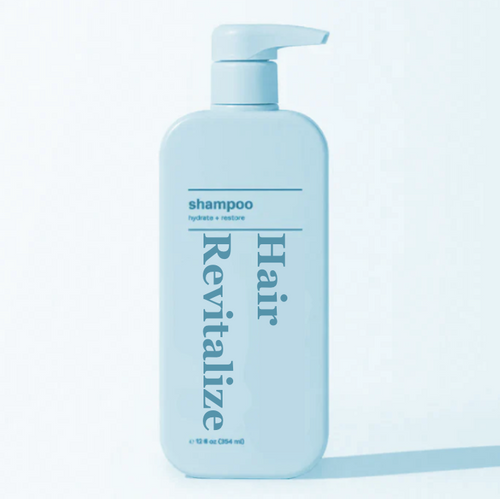
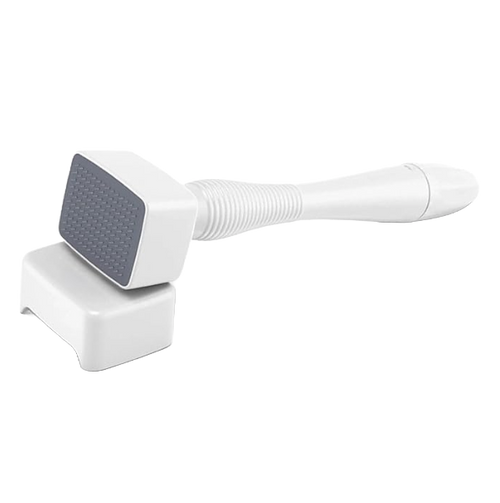
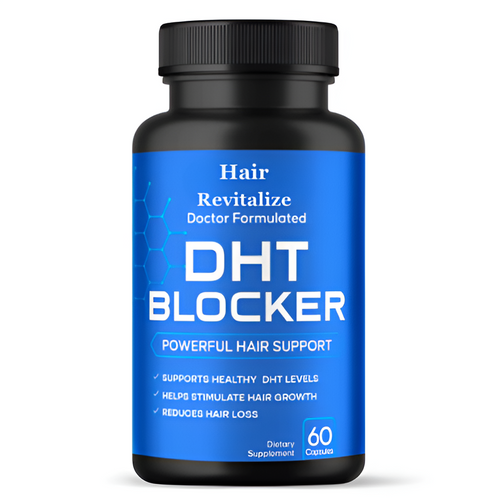
That's what was crammed into the cabinet above her sink. Rosemary oil off TikTok. Two dropper serums. A "growth" shampoo and conditioner set. Biotin gummies. A scalp scrub. A derma roller she used twice.
"I'd bought the serum everyone raved about. Twice. I did the castor oil thing. I did the rice water thing. I spent — I actually added it up once — around $1,700 over six years. And my part just kept getting wider."
Her dermatologist had run out of suggestions beyond the prescription route, which she'd read about at 2 a.m. and noped out of. So she just… accepted it. Started parting her hair differently to hide it. Bought a few hats she told everyone she "just liked."
Then she changed salons.
Her new stylist, Marisol, didn't upsell her a treatment. Didn't hand her another bottle. She just parted Dana's hair, looked closely at the scalp, and asked one question that stopped her cold.
"Your Serum Never Touched Your Scalp. That's Why Nothing Worked."
"What are you putting on this?" Marisol asked, running a finger along the part.
Dana listed everything. The serums. The oils. Marisol nodded slowly.
"Come here." She turned Dana toward the mirror and parted the hair wider. "Look. All of that is sitting on your hair. See the shine on the strands? That's your serum. It's coating the hair shaft and sliding right off. Your scalp — where the follicle actually is — is bone dry. It never got a drop."
"You've been conditioning your hair with a fifty-dollar bottle. Your follicles have been on their own the whole time."
Dana blinked. "But I applied it. Every night."
"To your hair. Not your scalp. There's a difference, and it's the whole difference." Marisol grabbed a paper towel and pressed it flat to the counter. "Your scalp is built to keep things out — oil, dead skin, a full head of hair in the way. You can't just drip something on top of all that and expect it to reach two millimeters down to the root. It beads up. It runs off. It washes out that night."

"So the products weren't junk," Dana said slowly. "They just never got where they needed to go."
"Most of them, right. And here's the second thing nobody tells you." Marisol pulled one of Dana's serums out of her bag and turned it over. "See this? 'Proprietary blend.' That means they won't tell you how much of the good stuff is actually in here. Usually it's a trace. Enough to put the name on the label, nowhere near what the research used."
"So you can lose twice with the same bottle. The actives never reach your scalp — and even if they did, there's not enough of them to matter."
What She Found When She Got Home
Dana drove home and took every bottle down from the cabinet, lining them up on the counter like a lineup of suspects.

Fourteen products. She turned each one over and read the back. Eleven of them said "proprietary blend." Not one printed how much Redensyl, or biotin, or anything else was actually inside. The three that were droppers — she now knew exactly where those had gone. Onto her hair. Down the drain.
"I felt stupid for about ten minutes. Then I felt relieved. Because it meant my hair wasn't a lost cause. I'd just been solving the wrong half of the problem — twice."
This is the part the industry doesn't advertise: a serum that almost works is the most profitable product ever invented. You blame your genes, you blame yourself, and you buy the next bottle. Fix the delivery and print the dose, and the whole racket falls apart.
What Her Sister Proved Without Meaning To
Her younger sister Priya used the same brand of serum. Same price, same promises. But Priya had switched, months earlier, to a roll-on — a little rollerball she dragged along her part every night.
Priya's part had stopped widening. Dana's hadn't.
Same category of ingredients. Wildly different result. One of them was pressing actives onto the scalp. The other was polishing her hair with them.
Same intention. Opposite delivery. That's the entire story of who keeps their hair and who watches it thin.
The 30-Second Test That Changed Everything
Marisol had told Dana what to look for: a roll-on applicator, so the actives actually get pressed onto the scalp — and real percentages printed on the label, not a "blend."

That night Dana found one that checked both boxes. She read the label three times because she wasn't used to seeing the numbers spelled out: 3% Redensyl. 2% Aminexil. 2% AnaGain. 3% Rosemary Extract. The rosemary caught her eye — she'd read it was the one a study put head-to-head against minoxidil.
Two softgels-worth of overthinking later, she ordered a bottle.
What Happened By Week 3
Week 1: Nothing dramatic — but her scalp felt cleaner, calmer. She almost didn't trust it.
Week 2: The drain. She looked, out of six years of habit, and there was noticeably less. She counted anyway. Fewer.
Week 3: Standing at the mirror, she saw them — tiny, stubborn baby hairs pushing up along her part line. She took a photo. Then another. Then she texted her sister.
"It finally felt like the stuff was actually getting in, instead of sitting on top and washing away. Thirty seconds a night. That was the whole thing I'd been missing."
The Mirror Moment — 8 Weeks Later

Week 8. Dana was getting ready and caught her reflection at the part. "It wasn't magic. It was just… fuller. The part didn't jump out at me under the light anymore. I stopped reaching for the hat."
At a family dinner, her daughter took a photo from across the table — the overhead-light angle Dana had spent years dodging. This time she didn't ask her to delete it.
"For six years I bought serums that never reached my scalp. Turns out the fix wasn't a better ingredient. It was finally getting the ingredient to the right place."


